

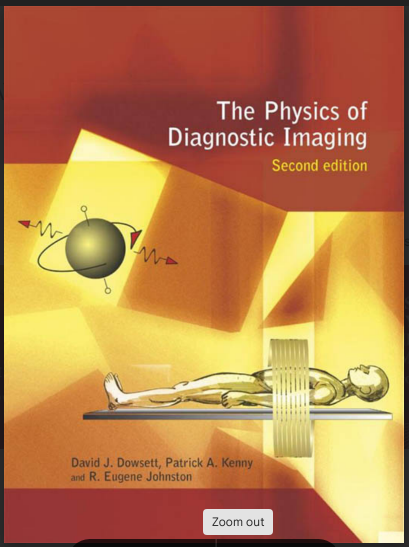
Description
PREFACE
Perhaps the major problem associated with teaching
the physics of diagnostic imaging is its changeability.
Over the last thirty years radiology has seen dramatic
improvements in non-invasive imaging using X-rays,
gamma rays, high frequency sound, and high fre-
quency radio waves. Over the last fifteen years the
quality of these images has enabled visualization of
early pathological changes both in anatomy and func-
tion. The last ten years has seen the emphasis change
to low radiation dose techniques which demand more
efficient imaging methods. To some extent these have
been supplied by digital image capture using either
position sensitive phosphors (computer radiogra-
phy) or purely electronic detector techniques enabling
direct visualization (direct radiography). With digital
systems a truly film-less environment can exist pro-
viding easy and rapid transmission of images, patient
information and quality control data across countries,
continents, and oceans. This complex scenario pro-
vides difficulties when trying to understand modern
developments, teach students or set examinations.
This book introduces current methods, fundamental
principles, and applications. The reader is encouraged
to explore specialist publications armed with this basic
information.
DJD
PAK
REJ
2005
Reviews
There are no reviews yet.