

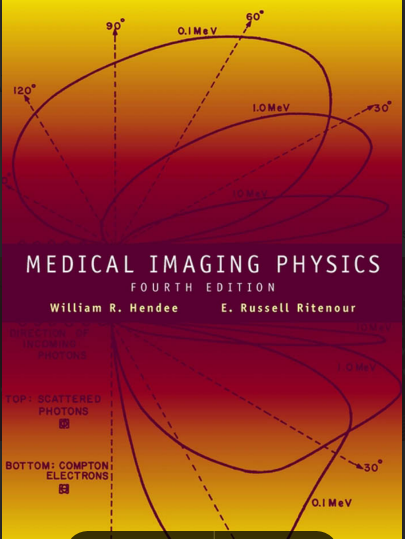
Description
PREFACE TO THE
SECOND EDITION
The first edition of this text was developed from the extensive syllabus we had created for a
radiology resident board review course that has been taught annually at the University of
California Davis since 1984. Although the topics were, in broad terms, the same as in the
course syllabus, the book itself was written de novo. Since the first edition of this book was
completed in 1993, there have been many important advances in medical imaging technol-
ogy. Consequently, in this second edition, most of the chapters have been completely rewrit-
ten, although the organization of the text into four main sections remains unchanged. In
addition, new chapters have been added. An Introduction to Medical Imaging begins this new
edition as Chapter 1. In the Diagnostic Radiology section, chapters on Film Processing, Digi-
tal Radiography, and Computer Networks, PACS, and Teleradiography have been added. In
recognition of the increased sophistication and complexity in some modalities, the chapters
on MRI and nuclear imaging have been split into two chapters each, in an attempt to break
the material into smaller and more digestible parts. Considerable effort was also spent on
integrating the discussion and assuring consistent terminology between the different chap-
ters. The Image Quality chapter was expanded to provide additional details on this impor-
tant topic.
In addition, a more extensive set of reference data is provided in this edition. The
appendices have been expanded to include the fundamental principles of physics, physical
constants and conversion factors, elemental data, mass attenuation coefficients, x-ray spec-
tra, and radiopharmaceutical characteristics and dosimetry. Web sites of professional soci-
eties, governmental organizations and other entities that may be of interest to the medical
imaging community are also provided.
The field of radiology is in a protracted state of transition regarding the usage of units.
Although the SI unit system has been officially adopted by most radiology and scientific
journals, it is hard to avoid the use of the roentgen and rem. Our ionization chambers still
read out in milliroentgen of exposure (not milligray of air kerma), and our monthly film
badge reports are still conveyed in millirem (not millisieverts). The U.S. Government has
been slow to adopt SI units. Consequently, while we have adopted SI units throughout most
of the text, we felt compelled to discuss (and use where appropriate) the older units in con-
texts where they are still used. Furthermore, antiquated quantities such as the effective dose
equivalent are still used by the U.S. Nuclear Regulatory Commission, although the rest of
the world uses effective dose.
We have received many comments over the years from instructors, residents, and other
students who made use of the first edition, and we have tried to respond to these comments
by making appropriate changes in the book. Our intention with this book is to take the
novice reader from the introduction of a topic, all the way through a relatively thorough
description of it. If we try to do this using too few words we may lose many readers; if we
use too many words we may bore others. We did our best to walk this fine line, but if you
are in the latter group, we encourage you to readfaster.
We are deeply grateful to that part of the radiology community who embraced our first
effort. This second edition was inspired both by the successes and the shortcomings of the
first edition. We are also grateful to those who provided suggestions for improvement and
we hope that they will be pleased with this new edition.
Jerrold T. Bushberg
J Anthony Seibert
Edwin M Leidholdt, Jr.
JohnM Boone
Reviews
There are no reviews yet.