

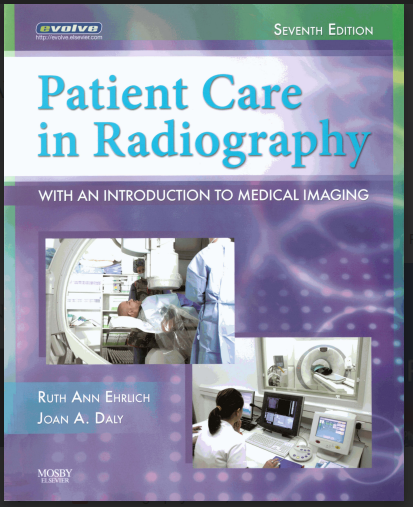
Description
PREFACE
The advent of digital radiographic imaging has radically changed many paradigms
in radiography education. In order to bring the material we present completely up-
to-date, and in the final analysis to fully serve our students, much more is needed
than simply adding two or three chapters on digital imaging to our textbooks.
First, the entire emphasis of the foundational physics our students learn must be
adjusted in order to properly support the specific information on digital imaging
that will follow. For example, a better basic understanding of waves, frequency,
amplitude and interference is needed so that students can later grasp the concepts
of spatial frequency processing to enhance image sharpness. A more thorough
coverage of the basic construction and interpretation of graphs prepares the student
for histograms and look-up tables. Lasers are also more thoroughly discussed here,
since they have not only medical applications, but are such an integral part of
computer technology and optical disc storage.
Second, there has been a paradigm shift in our use of image terminology. Perhaps
the most disconcerting example is that we can no longer describe the direct effects of
kVp upon image contrast; rather, we can only describe the effects of kVp upon the
subject contrast in the remnant beam signal reaching the image detector, a signal
whose contrast will then be drastically manipulated by digital processing techniques.
Considerable confusion continues to surround the subject of scatter radiation
and its effects on the imaging chain. Great care is needed in choosing appropriate
terminology, accurate descriptions and lucid illustrations for this material.
The elimination of much obsolete and extraneous material is long overdue. Our
students need to know the electrical physics which directly bear upon the production
of x-rays in the x-ray tube—they do not need to solve parallel and series circuit
problems in their daily practice of radiography, nor do they need to be spending
time solving problems on velocity.
A large amount of new information on digital processing is being introduced into
our curriculum. Room must be made for this critical material, and since it has been
some time since the fields of CT and MRI have established their own certification
exams, these are appropriate chapters to eliminate. We do want our graduates to be
able to answer basic questions from patients about any of the specialized imaging
fields. In this textbook, this information is embedded within chapters where it fits
perfectly—MRI is briefly overviewed when radio waves are discussed under basic
physics, sonography is also discussed under the general heading of waves, and CT is
described along with attenuation coefficients under digital imaging.
It is time to bring our teaching of image display systems up to date by presenting
the basics of LCD screens and the basics of quality control for electronic images.
These have been addressed in this work, as part of eleven full chapters dealing
specifically with digital and electronic imaging concepts.
Reviews
There are no reviews yet.