
Description
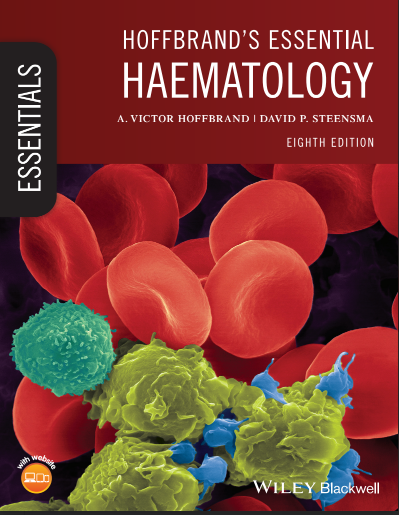
Preface to the Eighth Edition
It is only three years since the 7th edition of this book appeared, but the rapid advances in knowledge of
the pathogenesis of blood diseases and in their treatment have necessitated the early publication of this
8th edition. The application of next generation sequencing has revealed the driving mutations underlying
many of the neoplastic haematological diseases. Advances in genomic, immunological and immunohis-
tochemical techniques have improved their classification and also enabled highly sensitive tracking of
response to therapy. The detection and quantification of minimal residual disease is increasingly recog-
nized as important in planning protocols for treatment of haematological malignancies and for deciding
when to end therapy or to intensify it.
The latest (2016) World Health Organization classification of the haematological neoplastic diseases,
which relies on much new cytogenetic and molecular genetic information, has been incorporated into the
relevant chapters of this new edition. Preclinical clonal abnormalities and their significance in relation to
future overt haematological or systemic diseases are being increasingly discovered and are discussed here.
Treatment has also changed substantially. This is partly due to the introduction of many new drugs,
often targeted at the signalling pathway, which has been aberrantly activated by a specific mutation. The
range of monoclonal antibodies used in therapy, some with conjugated toxins, has also increased. Chi-
meric antigen receptor (CAR)-T cells are now licensed for treatment of patients with relapsed and refrac-
tory B-cell malignancies and are in clinical trials for a wide range of other haematological malignancies.
Gene therapy has become a reality for haemophilia and thalassaemia major, and is now also in trials for
sickle cell anaemia. Drugs which promote effective erythropoiesis are proving beneficial for alleviating
anaemia and transfusion dependence in myelodysplastic syndromes and thalassaemia. The treatment by
anticoagulation of venous thrombosis and atrial fibrillation has undergone a major shift from warfarin to
the new direct-acting oral anticoagulant drugs for the majority of patients. New text, figures and tables
have been added throughout the book to incorporate and illustrate these major advances.
Professor Paul Moss co-authored four previous editions of Essential Haematology. We are immensely
grateful for his outstanding expert input over many years in keeping its content up to date in a rapidly
changing field and maintaining the style of the book. For this 8th edition, David Steensma, from Harvard
Medical School and the Dana-Farber Cancer Institute in Boston, has joined as co-author. David is inter-
nationally known for his research in the myeloid malignancies and as a writer and teacher within the
broader field of haematology.
Jean Connors, also Professor of Haematology at Harvard Medical School and Consultant Haematologist
at Brigham and Women’s Hospital and the Dana-Farber Cancer Institute Hospital, has substantially helped
to update the five chapters dealing with platelets, blood coagulation and their disorders. We are grateful to
Jean for her expert knowledge in revising these chapters, where considerable changes in practice have taken
place in the last few years. We also thank Dr Keith Gomez of the Royal Free Hospital for his help in updating
of the section of the multiple-choice questions relating to Chapters 24-28 which accompany the electronic
version of the printed book.
We hope Essential Haematology will continue to be used worldwide by medical students and as a
primer for those entering haematology as a speciality. The book is also aimed at clinical and non-clinical
scientists, nurses and others with a special interest in the blood and its diseases. We thank our publishers
Wiley-Blackwell and in particular Jennifer Seward, Nick Morgan and Magenta Styles for their tremen-
dous support in producing this new 8th edition and Jane Fallows for her expert drawing of new figures.
We hope Essential Haematology will continue internationally to provide a stimulating and comprehensive
introduction to one of the most exciting and advanced fields in medicine.
Victor Hoffbrand
David Steensma
2019
Reviews
There are no reviews yet.