

Description
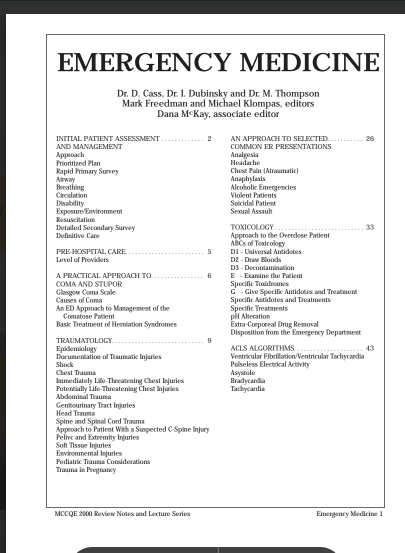
INITIAL PATIENT ASSESSMENT
AND MANAGEMENT
APPROACH
❏ patients are triaged as
• emergent
• urgent
• non-urgent
PRIORITIZED PLAN
1. Rapid Primary Survey (RPS)
2. Resuscitation (often occurs at same time as RPS)
3. Detailed Secondary Survey
4. Definitive Care
RAPID PRIMARY SURVEY
Airway maintenance with C-spine control
Breathing and ventilation
Circulation (pulses, hemorrhage control)
Disability: neurologic status
Exposure (complete) and environment (temperature control) ❏ restart sequence from beginning if patient deteriorates
AIRWAY
❏ secure airway is first priority ❏ assume a C-spine injury in every trauma patient ––> immobilize
with collar and sand bags
Causes of Airway Obstruction
❏ think of three areas
• airway lumen: foreign body, vomit
• airway wall: edema, fractures
• external to wall: lax muscles (tongue), direct trauma, expanding hematoma
Airway Assessment
❏ consider ability to breathe and speak to assess air entry ❏ noisy breathing is obstructed breathing until proven otherwise ❏ signs of obstruction
• apnea
• respiratory distress
• failure to speak
• dysphonia
• adventitous sounds
• cyanosis
• conduct (agitation, confusion, “universal choking sign”) ❏ think about immediate patency and ability to maintain patency
in future (decreasing LOC, increasing edema) ❏ always need to reassess, can change rapidly
Airway Management
❏ goals• achieve a reliably patent airway
• prevent aspiration
• permit adequate oxygenation and ventilation
• facilitate ongoing patient management
• give drugs via endotracheal tube • “NAVEL”: narcan, atropine, ventolin, epinephrine, lidocaine ❏ start with basic management techniques then progress to advanced
Basic Management
❏ protect the C-spine in the injured patient ❏ chin lift or jaw thrust to open the airway ❏ sweep and suction to clear mouth of foreign material

Reviews
There are no reviews yet.