

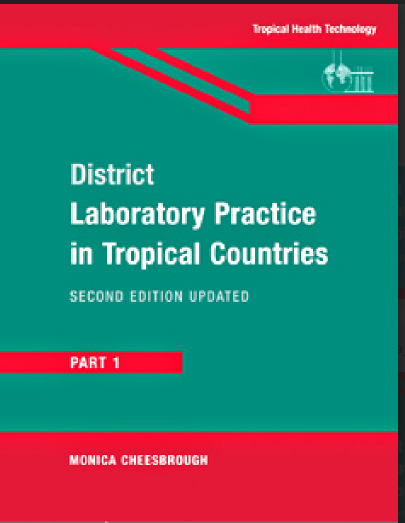
Description
Preface
Since the publication of the first edition of Part 1 District Laboratory Practice in Tropical Countries the
essential role of the laboratory in providing a scientific foundation for district health care and improving the
quality of health care to communities, has not changed. The new challenges faced by health authorities
however, have led to changes in laboratory practice and a greater emphasis on the need for reliable well
managed district laboratories and their rational use in district health care.
In deciding the changes to be incorporated in the new edition of Part 1, the author and those who have
helped with the revision have been guided by the views and requests of those using the book in their work
and training programmes. The important chapters covering management, quality assurance, health and safety
and equipping of district laboratories have been reviewed and updated where needed. For those with internet
access and e-mail facilities, the details of equipment manufacturers now include website information and
e-mail addresses.
Information on parasitic diseases and their control has been brought up to date. Current knowledge on HIV
interaction with parasitic pathogens and new technologies to diagnose parasitic infections have been included.
Immunochromatographic tests to diagnose malaria have been described, their limitations discussed, and
information on the WHO malaria rapid diagnostic tests website included. Other parasite-related websites and
a list of up to date references and recommended reading are given at the end of the parasitology chapter.
Within the clinical chemistry chapter, the text covering diabetes mellitus has been revized to include the
current WHO classification of diabetes and guidelines for diabetes diagnosis. Urine strip tests have also been
updated. To assist in monitoring HIV/AIDS patients for toxicity to antiretroviral drugs, a colorimetric test kit to
measure alanine aminotransferase (ALT) has been included where it is not possible to refer specimens for
testing to a regional clinical chemistry laboratory. Information is also given for a colorimetric creatinine test kit.
For many laboratory programmes, the introduction of standard operating procedures for laboratory tests
backed by quality assessment schemes has been key to improving the reliability, efficiency and accountability
of district laboratory services, motivating laboratory staff and increasing the confidence of laboratory users.
Safe laboratory practices now followed in many laboratories have reduced work-related accidents and
laboratory-acquired infections. It is hoped that the new edition of Part 1 will continue to help those involved
in training and those working in district laboratories, often in difficult situations. It is also hoped that it will
encourage health authorities to provide the resources needed to provide a quality laboratory service to the
community.
Monica Cheesbrough May 2005



Reviews
There are no reviews yet.