

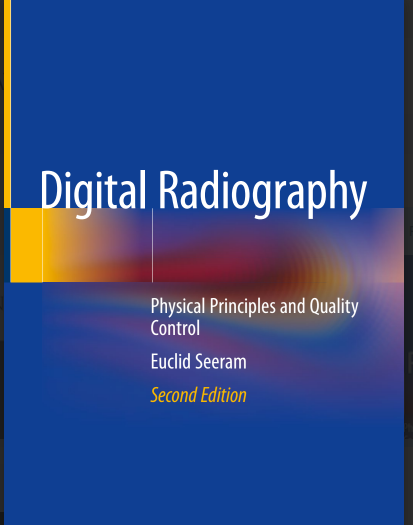
Description
Preface
The motivation for a second edition of this book stems from the continued
technical evolution of digital radiographic imaging systems, as well as the
introduction of new principles, issues, and ideas relating to digital imaging.
With these considerations in mind, the book is now titled Digital Radiography:
Physical Principles and Quality Control. Furthermore, technical advances
have been a recurring feature in digital detector technology and the develop-
ment of a standardized exposure indicator by the International Electrotechnical
Commission (IEC), Picture Archiving and Communication Systems (PACS),
and imaging informatics. The next era in imaging informatics will include
topics such as enterprise imaging, cloud computing, big data, and artificial
intelligence (AI) including subsets of AI such as machine learning and deep
learning.
Furthermore, there has been a significant development of a technique
referred to as digital tomosynthesis featuring two main application areas:
radiographic tomosynthesis and digital breast tomosynthesis (DBT).
An important consideration from this new title is the lack of textbooks on
this subject for radiologic technologists especially one that includes dose
optimization principles, an essential ingredient that provides significant guid-
ing principles to clinical practitioners to work within the ALARA (as low as
reasonably achievable) philosophy, in an effort to protect not only the patient
but personnel as well.
New to This Edition
The chapters in this book have been updated to address the continued tech-
nical evolution and major technology trends in digital radiographic imag-
ing. Furthermore, a set of updated articles have been cited to support the
inclusion of major new technical areas of current interest in clinical practice
such as the following: the standardized exposure indicator, digital tomosyn-
thesis, and enterprise imaging, including vendor neutral archives (VNAs),
cloud computing, big data (BG), and artificial intelligence (AI) including
subsets of AI such as machine learning and deep learning. The addition of
numerous new images illustrates the fundamental principles of these new
technologies, and new line drawings serve to enhance and provide impor-
tant concepts in the text. Last but not least, a reasonable effort has been




Reviews
There are no reviews yet.