
Description
PREFACE
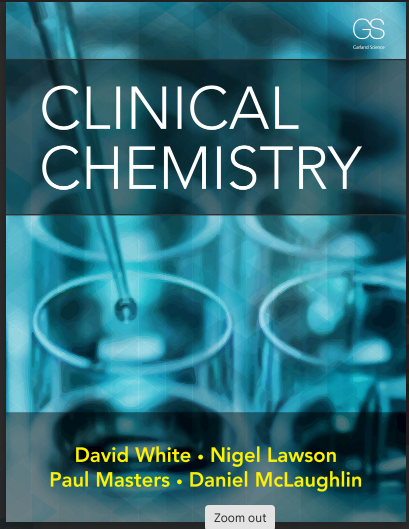
The discipline of Clinical Chemistry has many aliases throughout the world,
including Chemical Pathology, Medical Biochemistry, and different permutations
of the terms clinical, medical, and biochemistry. Even within the departments
in which it is a subdiscipline it may be known variously as Clinical Pathology,
Blood Sciences, or—increasingly—Laboratory Medicine. Despite this slight iden-
tity issue, Clinical Chemistry is a strong discipline that underpins much of the
diagnosis and monitoring of patients in modern health care systems. A good
understanding of clinical chemistry and an awareness of its use in the manage-
ment of patients are essential for both users and providers.
This text evolved from our combined experiences in the postgraduate teach-
ing of Clinical Chemistry, using material from courses in biochemistry, physiol-
ogy, and sub-specialties of medicine. Content has been expanded to include
core subjects from the syllabuses of examinations for the Royal Colleges, par-
ticularly of the Royal College of Pathologists, and other graduate courses. The
book is thus a suitable text for both undergraduate students of medicine and
biosciences as well as for postgraduates undergoing professional training.
From the start, we wanted the book to be relevant to clinical practice, but also
to include the core knowledge that enables the reader to see the full picture from
first principles. Our extensive combined experiences both as full-time academics
at the University of Nottingham (David and Danny) and as hospital consultants
in Clinical Chemistry at the Chesterfield Royal and Royal Derby Hospitals (Paul
and Nigel) have been equally valuable in enabling us to achieve these aims. The
book contains many analytical and clinical practice points, distilled as “pearls
of wisdom,” which are intended to be relevant on a day-to-day basis to people
working (or wishing to work) in Clinical Chemistry. In addition, there are many
case histories included that help to put the subject into its clinical context. We
believe that inclusion of clinical cases in each chapter is essential to illustrate
the way in which an understanding of the underlying basic science enables
interpretation of laboratory data in real-life clinical practice. Each case is based
on genuine data and scenarios that we have encountered in our laboratory and
clinical services. These case histories have been found to be very popular with
medical students, especially those undertaking case-oriented courses, such as
the University of Nottingham’s Graduate Entry Medicine program in the UK.
In selecting topics for the book, we have sought to provide a varied yet com-
prehensive approach to Clinical Chemistry, with a mixture of chapters; some
describe individual analytes, while others emphasize tissue integrity and func-
tion. In addition, we have included chapters on therapeutic drug monitoring,
poisons, pregnancy, inborn errors of metabolism, and, importantly, immediate
assessment of the critically ill patient. Clinical Chemistry, like any other disci-
pline, is always developing, and we have tried to ensure that the book reflects
current practice.
We have been very fortunate to work with many excellent academic, scien-
tific, and clinical staff from the University of Nottingham and the Royal Derby and
Chesterfield Royal Hospitals. Such good working interactions are vital in running
successful Clinical Chemistry departments. We believe those working relation-
Reviews
There are no reviews yet.