

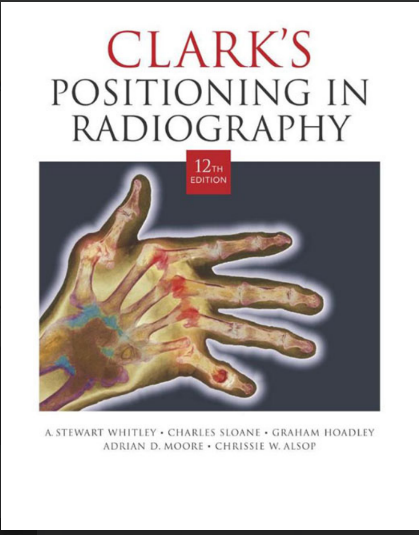
Description
Preface
This new edition builds on the achievements of the previous editions in containing all cur-
rent plain radiographic imaging techniques in a single volume. The companion volume
‘Clark’s Special Procedures in Diagnostic Imaging’ contains details of imaging techniques by
other modalities commonly available in a modern imaging department. Techniques that are
no longer undertaken, or are associated with high radiation patient doses, have been
removed or reference made to the best alternative modern technique.
This fully-revised 12th edition will ensure that the title retains its pre-eminence in the
field, with hundreds of new positioning photographs and radiographic images. Specialist
authors have been commissioned to contribute in their own fields, such as the Dental and
Mammography chapters. New Paediatric and Forensic sections reflect the changing demands
on a modern department. The book has also been expanded to include a Trauma section with
reference to Advance Trauma Life Support. The Miscellaneous chapter includes trauma,
foreign bodies, tomography, macroradiography, skeletal survey and soft tissue sections that
have all been extensively revised, as well as a brand new forensic radiography section.
The authors have remained aware throughout that this edition is being published at a time
when digital imaging is on the ascendancy, and have made reference to this. In the context
of computed radiography the expression ‘film’ has been replaced by ‘cassette’ or ‘image
receptor’ whilst recognizing that using direct digital radiography the term ‘image receptor’
should be exclusively used to reflect this developing situation. Equally it should be recognized
that the words ‘film’ and ‘image’ are interchangeable in the context of viewing an acquired
image by conventional film/screen technology. The Introduction chapter will allow the reader
to understand basic digital imaging concepts, enabling them to undertake further study and
learn how to adapt techniques to ensure that optimum image acquisition is made with the
relevant imaging dose.
This edition also reflects the developing role of the radiographer/technologist with the
introduction of ‘Radiological Considerations’ subheadings across all chapters, to give the
reader a better understanding of image interpretation requirements and the clinical context
in which imaging is undertaken. It recognizes the increasing role allied health professionals
play in image interpretation, and the improved quality of imaging that results from radiog-
rapher/technologists having a clear understanding of the reason for any examination.
The layout is further refined by introducing other subheadings such as ‘Essential Image
Characteristics’ and ‘Common Faults and Remedies’ to guide and assist the reader as to what
to look for, as well as the general guide as to how to undertake each radiographic projection.
We hope that these changes will improve the usefulness of the book and its relevance to
current radiographic practice, and provide a lasting tribute to the originator, Miss K.C. Clark.
Reviews
There are no reviews yet.