

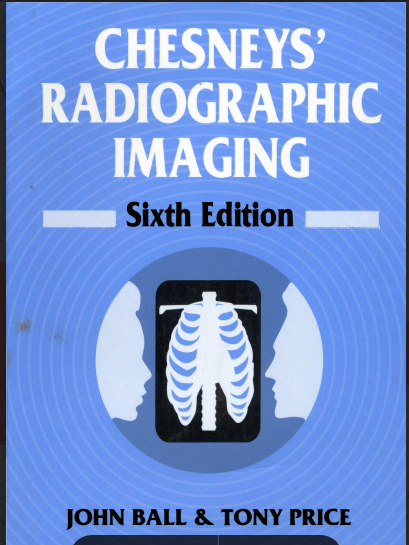
Description
Preface to the sixth edition
X
Only six years have elapsed since we handed over to our publishers the manuscript
for the 5th edition of Chesney;’ Radiographic Imaging. But during that brief period a
veritable revolution has been taking place in diagnostic imaging.
In the clinical field, the impact of digital technology is ever more apparent, and
while radiologists become increasingly involved in interventional procedures,
radiographers are expanding their roles into new areas, including those formerly
the province of their radiologist colleagues.
In education, the last remaining pre-registration diploma students are com-
pleting their DCR courses, and undergraduate radiography students already seem
part of the established scene. Meanwhile, traditional post-diplomate studies such as
the HDCR, DMU and DRI are being abandoned in favour of post-graduate
diplomas and higher degrees, with more and more radiographers tackling masters
degrees and doctorates.
We have attempted, in this latest revision, to reflect developments in the clinical
field by incorporating new material, pruning away some of the old, and where
appropriate, by changing the emphasis of what remains. Digital technology has
been given a higher profile, with new sections introduced on digital picture
archiving and communication systems (PACS) in Chapter 15, and computed
radiography (CR) in Chapter 28. However, for this edition, we have delayed dis-
cussing these topics in full detail until it becomes clearer exactly which system (if
any) will become the universally accepted standard. A description of dry silver
imaging has been introduced into Chapter 23, while Chapter 29 includes a new
section on receiver operating characteristics (ROC). In Chapter 16, the section on
the distorted image has been rewritten and more fully illustrated, while in Chapter
12 we have expanded the discussion of health and safety in processing areas.
As new technologies and techniques gain in importance, others fall by the
wayside. Hence, for example, we have relegated xeroradiography from its former
full chapter status, to a subsection of Chapter 28. The continued decline in the
importance of darkrooms is reflected in our revision of Chapter I 2.
The changes in radiography education suggested to us that both undergraduates
and postgraduate students may well use our book in a more questioning spirit than
hitherto. It has therefore been revised with this in mind. Early on in the revision
process, in what can only be described as a moment of madness, we optimistically
committed ourselves to referencing source material as an aid to our readers. There
have been moments when we regretted taking that decision! \Ve soon discovered,
not unexpectedly, that many aspects of radiographic practice are empirically based,
and while there is no shortage of anecdotal evidence to support these practices,
there is a paucity of up-to-date, high-quality published research, particularly from
radiographers. We sincerely hope that the recent changes in radiography education
will encourage radiographers not only to undertake much needed original research,
Reviews
There are no reviews yet.