

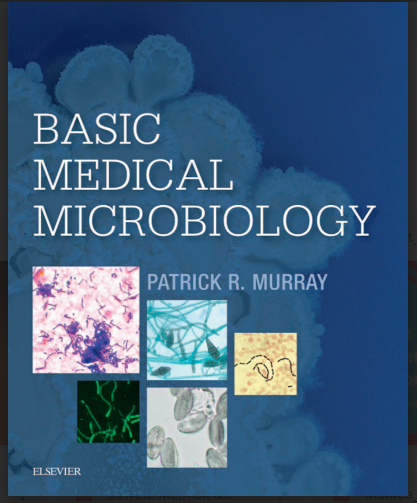
Description
PREFACE\
What is the bigger challenge—for a student or the
instructor to understand what is important in medical
microbiology? Many years ago when I took my first
graduate course in medical microbiology, I read thou-
sands of pages of text, listened to 5 hours of lectures a
week, and performed lab exercises 6 hours a week for
1 year. I was given a wonderful foundation in micro-
biology, but I frequently asked the question—that was
voiced by all the students—do I really need to know
all this stuff? The answer to that question is certainly
no, but the challenge is what information is needed.
Years later when I set out to write my first textbook on
microbiology, my goal was to only give the students
what they need to know, described in a way that is
informative, factual, and concise. I think I was success-
ful in that effort, but I also realize that the discipline of
microbiology continues to change as do approaches to
presenting information to the students. I am still firmly
convinced that my efforts in my first textbook, Medical
Microbiology, and subsequent editions are important,
forming the foundation of microbiology knowledge for
a student. This cannot be replaced by a quick search of
the internet or a published review because much of the
subject matter presented in Medical Microbiology—
epidemiology, virulence, clinical diseases, diagnostics,
treatment—is a distillation of the review of numerous
research articles and clinical and technical experience.
Having stated that, students frequently turn to review
books consisting of abbreviated summaries, illustra-
tions (should I say cartoons), and various mnemonic
aids for mastering this subject. As I have watched this
evolution of learning microbiology, I am struck by the
sacrifice that has been made. I believe microbiology is a
beautiful subject, with the balance between health and
disease defined by the biology of individual organisms
and microbial communities. Without an understand-
ing of the biology, lists of facts are soon forgotten. But I
am a realist and know the burden students face, master-
ing not only microbiology but also a number of other
subjects. So the personal question I posed was—is
there a better way to present to the student a summary
of information that is easy to understand and remem-
ber? This book is my approach to solving this question.
First, almost by definition, it is not comprehensive. Just
as I have carefully selected organisms and diseases to
present in this book, I have also intentionally not men-
tioned others—not because they are unimportant but
because they are less common. I have also not presented
a detailed discussion of microbial biology and virulence
or the immune response of the patient to an infection,
but simply presented the association between an organ-
ism and disease. Again, I felt those discussions should
be reserved for Medical Microbiology. Finally, the orga-
nization of this book is focused on organisms—bacteria,
viruses, fungi, and parasites—rather than diseases. I do
this because I think it is easier for a student to remember
a limited number of diseases associated with an organ-
ism rather than a long list of organisms (or a signifi-
cantly incomplete list) implicated in a specific disease
such as pneumonia. Still, patients present with disease
and the observer must develop a list of organisms that
could be responsible; so to aid the student, I provide
this differential diagnosis in the introductory chapter
of each organism section (Chapters 2, 12, 18, and 22).
I also provide in these introductory chapters an over-
view of the classification of the organisms (a structural
framework for remembering the organisms) and a list-
ing of antimicrobials that are used to treat infections.
The individual chapters in Sections 1–4 are organized
in a common theme: brief discussion of the individual
organisms, a summary of facts (properties, epidemiol-
ogy, clinical disease, diagnosis, treatment) provided in a
concise table, illustrations provided as a visual learning
aid, and clinical cases to reenforce the clinical signifi-
cance of the organisms. Finally, examination questions
are provided to help the student assess their ability to
assimilate this material. Again, I will emphasize that
this text should not be considered a comprehensive
review of microbiology. On the other hand, I believe
if the student masters this material, he or she will have
a firm foundation in the principles and applications of
microbiology. I certainly welcome all comments on
how successful my efforts are.
I would like to acknowledge the support and guid-
ance from the Elsevier professionals who help bring
this concept to reality, particularly Jim Merritt, Katie
DeFrancesco, Nicole DiCicco, and Tara Delaney.
Additionally, I want to thank the many students who
have challenged me to think about broad world of
microbes and distill this into the essential material
they must master, and my professional business col-
Reviews
There are no reviews yet.