

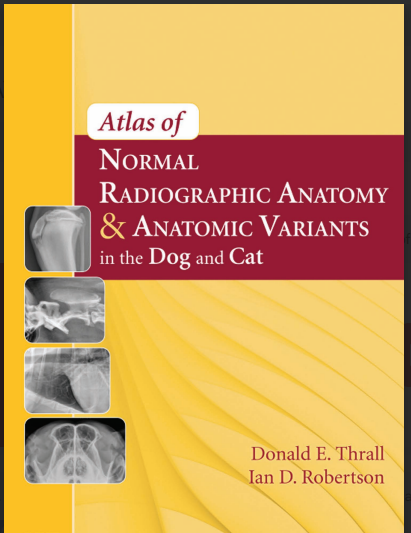
Description
Preface
Becoming a profi cient diagnostic radiologist is a long journey. Spe-
cialty training leading to board certifi cation entails at least 4 years
of post-DVM structured learning followed by a rigorous multistage
examination. However, board-certifi ed radiologists make up only a
small fraction of all veterinarians who interpret radiographs each
day. Most radiographic studies are being interpreted by competent
veterinarians whose training in image interpretation has been
limited to relatively few contact hours of didactic instruction and
supervised clinical training. All of these veterinarians, as well as
students who are just beginning to develop their interpretive skills,
must have a solid appreciation for normal radiographic anatomy,
anatomic variants, and things that mimic disease, which are affec-
tionately termed “fakeouts” by those of us who spend our lives
interpreting images.
The vastness of normal variation within dogs and cats is stagger-
ing. Although the generic cat is relatively standard, dogs come in all
shapes and sizes with innumerable inherent variations that can be
misinterpreted as disease unless recognized as normal. On top of
this inherent variation is the variation introduced by radiographic
positioning that can lead to countless variations in the appearance
of a normal structure. During their training, specialists have this
information grilled into them during many hours of mentored
learning and brow-beating by experienced radiologists. Non-spe-
cialists, on the other hand, may have had some introduction to
normal radiographic anatomy during veterinary school, but the acu-
ity of recall becomes dulled by the sheer volume of memory-bank
information needed to be a competent, licensed, contemporary
veterinarian. During one’s education as a student, it is impossible
Reviews
There are no reviews yet.