
Description
Preface
vii
As a paramedic student, you have chosen to work in an
exciting and rewarding area of health care prehospital
emergency care. Few professions can provide the same type
of opportunities that lie before you. Through your training,
you will meet the educational demands of a profession that
requires knowledge in anatomy and physiology, mathemat-
ics, pharmacology, advanced education in the health sci-
ences, and physical skills in using highly technical and
sophisticated equipment. You will have an opportunity to
play an important role in injury prevention, to participate
in research, and to be a role model in your community. And
most importantly, you will be entrusted with the lives of
the people you serve. This describes today ’ s paramedic – a
member of a unique profession composed of highly trained
men and women dedicated to making a difference in peo-
ple ’ s lives.
CONTENT AND ORGANIZATION
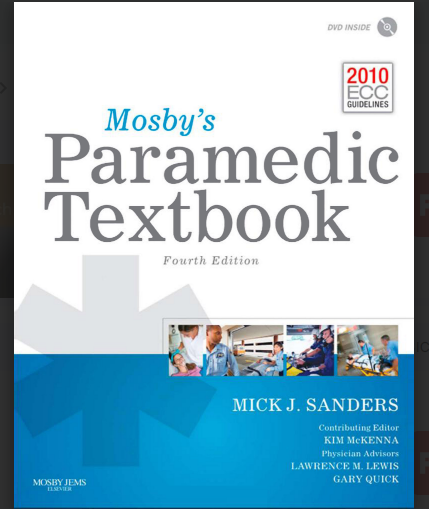
The fourth edition of Mosby ’ s Paramedic Textbook has been
extensively reviewed by physicians, nurses, paramedics, edu-
cators, and national and international experts in the fi eld
of emergency care people who know and value the impor-
tant role of the paramedic in health care delivery. The text
was developed from the 2008 National Highway Traffi c
Safety Administration ’ s National EMS Education Stan-
dards Instructional Guidelines for Paramedics. Every effort
was made to meet all educational components as defi ned in
that document. The fourth edition has also been enhanced
to address recent advances and important issues in emer-
gency medical services (EMS), including new equipment
and procedures; critical care transport (CCT); and special
considerations for dealing with bioterrorism and weapons
of mass destruction (WMD).
Part One explains the paramedic ’ s role and the unique
aspects of the profession, such as an overview of EMS
systems and the importance of personal well-being. It also
introduces the paramedic student to medical/legal issues,
ethics, documentation, and EMS communications. New
chapters included in this section include Injury Prevention
and Public Health ( Chapter 3 ) and Research Principles
and Evidence-Based Practice ( Chapter 8 ). Personal safety is
emphasized in Part One and throughout the text.
Part Two provides a review of human systems and is an
easily located reference for anatomical structures and their
functions. This section begins with a new chapter to explain
Medical Terminology ( Chapter 9 ). The general principles of
pathophysiology lay the foundation for the textbook and
are presented here as well. Chapters that map lifespan
development and special considerations for specifi c age
groups are included in this section.
Part Three introduces the paramedic student to pharma-
cology, methods of venous access, and medication admin-
istration. The pharmacology chapter has been enhanced to
include new emergency drugs. It also has an expanded
appendix on herbal products, their common uses, indica-
tions, and possible interactions with medications.
Part Four is devoted to airway management and ventila-
tion. The physiology of the respiratory system is presented
in depth, and basic and advanced methods of managing a
patient ’ s airway with new equipment and techniques are
illustrated in this chapter.
Part Five focuses on patient assessment and the impor-
tance of caring for both the physical and emotional needs
of the patient. New chapters devoted to Scene Size-Up
( Chapter 16 ), Primary Assessment ( Chapter 19 ), and Sec-
ondary Assessment ( Chapter 20 ) are included in this
edition. Separate chapters address therapeutic communica-
tions, history taking, and clinical decision making.
Part Six covers cardiology in detail. Electrophysiology of
the heart and electrocardiogram (ECG) interpretation is
presented fi rst and is followed by cardiovascular emergen-
cies such as cardiac rhythm disturbances, myocardial
infarction, and stroke. Techniques in managing cardiac
emergencies, including basic and advanced cardiac life
support, follow the 2010 guidelines established by the
American Red Cross (ARC) and the American Heart Asso-
ciation (AHA).
Part Seven addresses the many types of medical condi-
tions that can lead to an emergency response. New chapters
to this edition are Diseases of the Eyes, Ears, Nose, and

Reviews
There are no reviews yet.